Carmo Convent
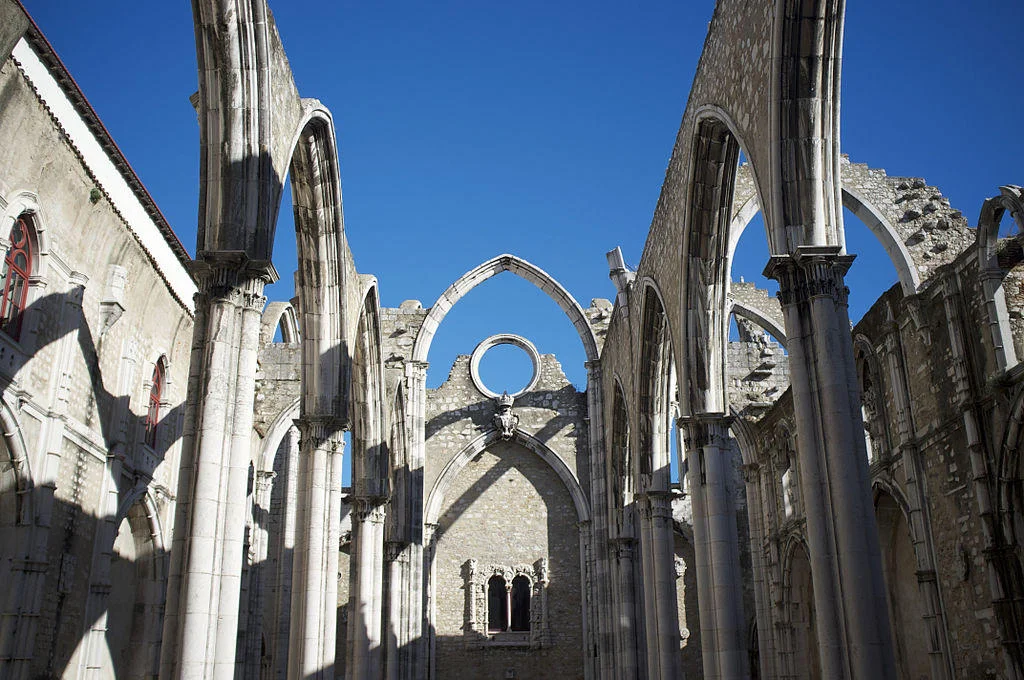
Right in the heart of our beloved city, you'll discover the Convent of Our Lady of Mount Carmel, a place of serene reflection and indomitable resilience, also affectionately known as Convento da Ordem do Carmo. This storied former Catholic convent has stood as a steadfast sentinel against the relentless march of time and bore witness to the cataclysmic 1755 Lisbon earthquake, an earth-shaking event that forever reshaped our history. Today, its weathered façade serves as a poignant testament to that fateful day, guarding within its ancient walls tales of unyielding endurance and remarkable transformation: stories that set my storytelling heart ablaze, eager to share with fellow adventurers. Care to join me on this voyage of discovery? Vamos nessa!
The monastery's roots trace back to its founding in 1389 by the Constable D. Nuno Álvares Pereira, a prominent military commander of the time. Built on lands acquired from his sister Beatriz Pereira and the admiral Pessanha, the convent underwent construction and expansion in the following years. By 1407, the presbytery and apse of the conventual church were completed, allowing for the first liturgical acts within its walls. The Carmelites friars from Moura, including Father Nuno de Santa Maria and the Constable D. Nuno Àlvares Pereira himself, inhabited the completed residential cells by 1423.
Throughout the centuries, the convent flourished as a center of spiritual devotion and intellectual pursuit. By 1551, it housed 70 clergy and 10 servants, demonstrating its significance within the religious community. However, the destructive force of the 1755 earthquake left the convent in ruins, particularly the library, which housed a substantial collection of approximately 5,000 volumes. The calamity forced the clerics to abandon the building, seeking refuge in alternative locations such as Cotovia and Campo Grande.